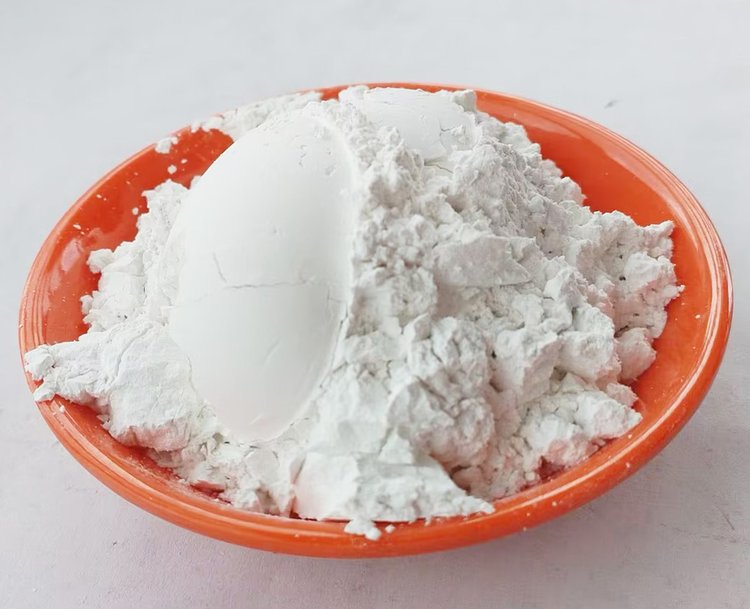

Silicon dioxide (SiO₂) is an inorganic compound composed of silicon and oxygen atoms; the silicon atom sits at the center of a regular tetrahedron with oxygen atoms at the vertices, forming a three-dimensional network atomic crystal structure in which discrete SiO₂ molecules do not exist.
Silicon dioxide (SiO₂) is one of the world's most widely used inorganic materials, but its industrial and scientific significance extends far beyond its traditional role as a filler, desiccant, or reinforcing agent. The development of the SiO₂ industry is increasingly characterized by application segmentation, process refinement, structural control, and functional diversification.
At the production level, manufacturers are differentiating themselves according to synthesis route, purity, particle size, morphology, surface chemistry, and downstream application. Precipitated silica, fumed silica, colloidal silica, silica gel, high-purity silica, mesoporous silica, and biomedical-grade silica increasingly represent distinct product markets rather than interchangeable forms of the same material.
At the research level, the emphasis is moving from simply producing SiO₂ toward controlling its pore structure, particle size, morphology, surface chemistry, stability, dispersibility, and ability to carry functional substances. Recent patent activity illustrates this transition particularly clearly: research is increasingly focused on large-pore-volume pharmaceutical excipients, highly stable colloidal silica, precisely controlled particle morphology, silica microcapsules, and improved precipitation reactors.
The overall direction can therefore be summarized as:
The SiO₂ industry is moving from commodity material production toward high-performance, application-specific, and functionally engineered materials.
1. A Highly Segmented Production Industry
There is no single "silica market." Instead, the industry consists of several technologically and commercially distinct product categories.
1.1 Precipitated Silica
Precipitated silica is one of the largest-volume forms of synthetic silica and is widely used in tires, rubber products, footwear, toothpaste, coatings, defoamers, animal feed, and other applications.
The basic industrial route generally involves the controlled reaction of sodium silicate with an acid, followed by aging, filtration, washing, drying, and sometimes surface or particle treatment.
The Chinese industry has developed substantial production capacity and a broad range of application-specific grades. Companies such as Quechen Silicon Chemical, Jinjiang Sanjiang, Tonghua Shuanglong, Jiangxi Black Cat, and other manufacturers participate in different segments of the market.
A particularly important feature of the Chinese market is increasing product specialization. Rather than producing a generic precipitated silica, manufacturers increasingly develop grades optimized for:
- Silicone rubber
- Tire and rubber reinforcement
- Toothpaste
- PE battery separators
- Coating matting
- Defoamers
- Feed additives
This trend is also evident in the operations of Yuanxiang New Material, whose portfolio includes multiple application-specific precipitated silica products. Its general-purpose silica for silicone rubber represents a major share of its revenue, illustrating the importance of specialized downstream markets.
1.2 Fumed Silica
Fumed silica occupies a different technological position. It is generally produced through high-temperature hydrolysis or oxidation processes involving volatile silicon compounds and is widely used in silicone rubber, adhesives, coatings, sealants, electronic encapsulation, and rheology modification.
The international market is highly concentrated, with major players including Evonik, Cabot, and Wacker.
Compared with conventional precipitated silica, fumed silica generally requires more sophisticated production technology, particularly in controlling:
- Primary particle size
- Aggregate structure
- Surface hydroxyl concentration
- Hydrophobic modification
- Dispersion behavior
- Purity
Chinese manufacturers are expanding their capabilities in this field, but the market continues to involve significant technological barriers.
1.3 Colloidal Silica
Colloidal silica consists of extremely fine SiO₂ particles dispersed in a liquid medium. It is used in applications including:
- Chemical mechanical polishing (CMP)
- Precision polishing
- Catalysts
- Coatings
- Paper
- Refractories
- Investment casting
The commercial requirements for colloidal silica differ substantially from those for precipitated silica. Particle-size distribution, colloidal stability, surface charge, concentration, and low contamination levels become critical.
Recent patent activity demonstrates that improving colloidal stability has become an important research direction. A patent application by Shanghai Xinanna Electronic Technology and Zhejiang Xinchuangna Electronic Technology proposes a three-layer stabilization strategy involving a surface modifier, steric stabilizer, and electrostatic stabilizer. The approach seeks to combine immediate steric protection, electrostatic stabilization, and longer-term surface modification.
This illustrates an important shift: the value of colloidal silica increasingly lies not merely in its SiO₂ content but in the ability to control its behavior as a dispersion.
1.4 Silica Gel
Silica gel remains an important commercial form of SiO₂, particularly in:
- Desiccants
- Chromatographic media
- Adsorbents
- Cat litter
- Industrial purification
The silica-gel industry is comparatively mature, but product differentiation continues through pore volume, pore-size distribution, surface area, particle morphology, moisture capacity, and purity.
1.5 High-Purity and Electronic-Grade SiO₂
High-purity silica represents one of the most technically demanding segments of the broader SiO₂ value chain.
Its applications include:
- Semiconductor manufacturing
- Electronic packaging
- CMP
- Optical materials
- Insulating layers
- Photolithography-related processes
- Silicon photonics
- Advanced packaging
Here, the relevant performance criteria are fundamentally different from those of commodity silica. Metal contamination, particle-size distribution, purity, dielectric properties, thermal properties, and process consistency can determine whether a material is suitable for advanced electronics.
In electronic packaging, spherical silica fillers are attracting particular attention. Development trends include:
- Ultra-high purity
- Sub-10 μm particle sizes
- Increasingly fine particle fractions
- Low dielectric properties
- Improved thermal conductivity
- Controlled spherical morphology
- Plasma spheroidization
- More environmentally compatible processing
Consequently, the economic value of high-purity SiO₂ can be dramatically higher than that of conventional industrial silica.
2. Nanostructured and Mesoporous Silica: From Material to Platform
One of the most important technological developments is the emergence of silica as a designable platform material.
Nanoparticles, mesoporous silica, hollow silica, hierarchical porous silica, core-shell structures, and functionalized silica allow researchers to control not only the chemical composition but also the physical architecture of the material.
Classical mesoporous structures such as MCM-41, MCM-48, SBA-15, and SBA-16 remain important research platforms. However, research has increasingly moved toward:
- Hierarchical porous structures
- Hollow particles
- Yolk-shell structures
- Dendritic mesoporous silica
- Magnetic mesoporous silica
- Chiral mesoporous silica
- Stimuli-responsive silica
- Multifunctional core-shell particles
Common synthesis technologies include:
- Sol-gel processes
- Stöber synthesis
- Surfactant templating
- Hydrothermal synthesis
- Microemulsion methods
- Hard and soft templates
- Biomimetic synthesis
- Aerosol-assisted synthesis
The fundamental challenge is no longer simply achieving a particular structure in the laboratory. It is translating precise laboratory synthesis into reproducible, economical, environmentally acceptable industrial manufacturing.
3. Surface Functionalization Is Changing the Role of SiO₂
The surface of silica naturally contains silanol groups (Si–OH), making it an exceptionally versatile platform for chemical modification.
Researchers can introduce:
- Amino groups
- Thiol groups
- Carboxyl groups
- Alkyl groups
- Epoxy groups
- Phosphonic groups
- Organosilanes
- Polymers
- Metal nanoparticles
- Metal oxides
This transforms SiO₂ from an essentially passive filler into a functional and programmable interface.
Functionalized silica can therefore be designed for:
- Selective adsorption
- Heavy-metal removal
- CO₂ capture
- Molecular separation
- Heterogeneous catalysis
- Chemical sensing
- Biosensing
- Drug delivery
- Controlled release
This development is strategically important because surface engineering can create new value without necessarily changing the underlying SiO₂ composition.
4. Pharmaceutical and Biomedical Silica
Biomedical applications represent one of the most research-intensive areas for advanced silica.
Mesoporous silica nanoparticles are attractive drug-delivery platforms because they combine:
- High surface area
- Adjustable pore size
- High loading capacity
- Surface functionalization
- Relatively favorable biocompatibility
Research is increasingly focused on structure-controlled silica combined with biologically functional surfaces.
Important parameters include:
- Particle size
- Pore size
- Pore volume
- Surface charge
- Degradation rate
- Surface functionalization
- Drug-loading capacity
Applications include:
- Controlled drug release
- Targeted drug delivery
- Diagnostic imaging
- Biosensing
- Vaccine and therapeutic delivery
- Combined diagnostic and therapeutic systems
- Antibacterial materials
- Bone regeneration
A particularly important development is biodegradable mesoporous silica, where researchers introduce degradable bonds or selected metal ions to improve controlled dissolution.
Silica is also being investigated in bone tissue engineering. Its incorporation into bioactive glass, hydrogels, and three-dimensional printing scaffolds can contribute to improved structural and biological performance.
5. Recent Patent Activity Reveals the Direction of Industrial R&D
Recent patent developments provide a useful window into how companies are attempting to solve practical production and application problems.
5.1 Large-Pore-Volume Silica for Pharmaceutical Excipients
Guangzhou Lingwei Technology, Lengshuijiang San-A New Materials, and Anhui Lingwei New Materials jointly obtained patent CN118270797B for a process for producing large-pore-volume silica suitable for pharmaceutical excipients.
The process uses high-purity solid sodium silicate as the starting material and involves dissolution, filtration, dilution, co-current reaction with sulfuric acid, dispersion and emulsification, aging, washing, and spray drying.
The targeted product combines:
- High pore volume
- High silica content
- Low sulfate content
- Low microbial burden
- Low spot count
The significance is that conventional precipitation technology is being refined to satisfy much stricter pharmaceutical quality requirements.
5.2 Highly Stable Colloidal Silica
CN120964826A, filed by Shanghai Xinanna Electronic Technology and Zhejiang Xinchuangna Electronic Technology, focuses on improving the stability of colloidal silica.
Its proposed three-part stabilization mechanism combines:
- A surface modifier
- A steric stabilizer
- An electrostatic stabilizer
The concept reflects a broader trend in advanced colloidal materials: stability is increasingly engineered through multiple interacting mechanisms rather than a single additive.
5.3 Particle-Size and Morphology Control
Wanhua Chemical has filed patent CN122144742A for a process designed to control the particle size and morphology of silica sol.
The process combines organic solvent, alkaline catalyst, acid catalyst, and water to prepare a mother liquor. Alkoxysilane is then introduced under controlled feeding conditions using a peristaltic pump and feed redistribution system.
By controlling nucleation and subsequent particle growth, the process aims to regulate particle size and morphology.
This is significant because it demonstrates the movement from conventional batch synthesis toward process-engineered particle architecture.
5.4 Silica Microcapsules
Jinsanjiang (Zhaoqing) Silicon Materials has developed a silica microcapsule technology under patent CN121401986B.
The process forms an emulsion from a polymer-containing aqueous phase and an oil-soluble core-material phase, followed by sodium-silicate gelation and aging.
The resulting silica shell can encapsulate functional core materials for potential applications in:
- Personal care
- Pharmaceuticals
- Construction
- Energy
- Functional chemicals
This is an important example of the transition from silica as a bulk material to silica as a delivery and encapsulation architecture.
5.5 Improved Precipitation Reactor Design
Sanming Fengrun Chemical has developed a precipitation reactor under patent CN224793516U.
The equipment allows the vertical position of the mixing assembly to be adjusted while maintaining rotational agitation. The objective is to improve mixing throughout the reaction vessel and reduce differences in particle-size distribution.
This example highlights an often-overlooked aspect of silica innovation: reactor engineering can be just as important as chemical formulation.
The ultimate product properties of precipitated silica depend not only on chemical composition but also on:
- Mixing intensity
- Local concentration gradients
- Addition rate
- Reaction temperature
- Aging
- Residence time
- Mass transfer
- Drying conditions
6. Silica in Energy Storage
Energy storage represents another major research frontier.
SiO₂ has been investigated in lithium-, sodium-, and zinc-based battery systems as components of:
- Anodes
- Electrolytes
- Separators
- Protective coatings
A common research strategy is to combine silica with electrically conductive materials:
SiO₂ + carbon + conductive nanomaterials
Examples include:
- SiO₂/C
- SiO₂/graphene
- SiO₂/carbon nanotubes
- Silica-derived silicon/carbon composites
Silica coatings can also help stabilize electrode materials and mitigate structural degradation.
The commercial opportunity, however, depends on whether these sophisticated structures can achieve adequate performance at acceptable manufacturing costs. This is another example of the industry's central challenge: laboratory performance must ultimately be translated into scalable economics.
7. Photocatalysis and Solar-Energy Applications
Mesoporous silica is frequently used as a carrier, template, or structural component rather than as the primary photocatalyst.
Representative systems include:
- SiO₂/TiO₂
- SiO₂/ZnO
- SiO₂/metal nanoparticles
- SiO₂/metal complexes
- SiO₂/carbon composites
Research applications include:
- Hydrogen production
- CO₂ photoreduction
- Pollutant degradation
- Biomass conversion
- Solar-energy conversion
- Photovoltaic materials
The value of silica in these systems derives largely from its ability to provide high surface area, controlled pore structures, dispersion of active species, and resistance to aggregation.
8. Environmental Applications
Environmental technologies are another important application area for porous and functionalized silica.
Water treatment
Research includes:
- Heavy-metal adsorption
- Organic pollutant removal
- Dye adsorption
- Membrane separation
- Desalination
Air and gas treatment
Applications include:
- VOC adsorption
- Catalytic oxidation
- CO₂ capture
- Photocatalytic pollutant degradation
The combination of high surface area and tunable surface chemistry makes porous silica particularly attractive for adsorption and catalytic applications.
The long-term commercial opportunity will depend on material cost, regeneration performance, operating lifetime, and scalability.
9. Advanced Coatings and Composite Materials
Traditional industrial applications remain economically important even as advanced applications receive more research attention.
Silica continues to be widely used in:
- Tires
- Rubber reinforcement
- Plastics
- Adhesives
- Sealants
- Coatings
- Paints
- Paper
- Polishing
- Cosmetics
- Pharmaceuticals
The technological focus is shifting from simply increasing silica loading to optimizing the interaction among:
particle size + aggregation + surface chemistry + dispersion + polymer matrix compatibility.
This represents a more sophisticated approach to conventional materials engineering.
10. Silica Aerogels: Toward Lower-Cost Manufacturing
Silica aerogels are characterized by extremely low density, high porosity, and excellent thermal-insulation performance.
Research is increasingly concentrated on two practical problems:
- Improving mechanical strength
- Reducing manufacturing costs
Researchers are investigating reinforcement using:
- Carbon nanotubes
- SiOC nanoparticles
- Sepiolite fibers
- Polymer networks
- Organic-inorganic hybrid structures
At the same time, sodium silicate is attracting attention as a lower-cost precursor. By combining sodium-removal processes with freeze-drying or other drying technologies, researchers seek to reduce the cost of aerogel production.
This could be important for moving aerogels from specialized applications toward broader industrial deployment.
11. The Role of Large Chemical Companies
The participation of major chemical companies illustrates another feature of the SiO₂ industry: silica technology is increasingly becoming integrated into broader chemical-materials portfolios.
Wanhua Chemical, for example, has substantial businesses in petrochemicals and polyurethane materials while also developing silica-related technologies.
Its silica research is therefore not necessarily isolated from its wider chemical-engineering capabilities. Instead, it can potentially benefit from expertise in:
- Reaction engineering
- Process control
- Organic-inorganic interfaces
- Scale-up
- Specialty chemicals
- Polymer applications
This suggests that future competition may increasingly involve not only traditional silica manufacturers but also diversified chemical companies capable of integrating silica into larger material systems.
12. China’s Position in the Global SiO₂ Industry
China has developed a particularly strong position in high-volume silica production, especially precipitated silica.
At the same time, domestic companies are increasingly moving into:
- Nanostructured silica
- Specialty precipitated silica
- Fumed silica
- Colloidal silica
- High-purity silica
- Electronic materials
- Pharmaceutical excipients
- Functionalized silica
- Silica microcapsules
Companies such as Lingwei Technology demonstrate the development of specialized nanomaterial businesses. Its reported first-half 2026 revenue contribution from nanomaterials illustrates how specialized silica-related products can become the dominant business of a dedicated materials company.
The emergence of affiliated manufacturing entities, such as Anhui Lingwei New Materials, also indicates that companies are expanding production capacity geographically while simultaneously building intellectual-property portfolios.
The broader strategic question for Chinese producers is therefore no longer simply how to increase SiO₂ capacity. It is how to move from volume-based competition toward performance-based competition.
13. Production and Research Are Converging
The relationship between industrial production and scientific research is becoming increasingly direct.
| Dimension | Production | Research |
|---|---|---|
| Primary objective | Stable, economical manufacturing | Precise structural and functional control |
| Major products | Precipitated, fumed, colloidal silica, silica gel, high-purity silica | Mesoporous, functionalized, composite and smart silica |
| Key parameters | Purity, particle size, morphology, dispersion, cost | Pore structure, surface chemistry, morphology, functionality |
| Main challenge | Scale, consistency, cost | Scale-up and reproducibility |
| Emerging applications | Electronics, pharmaceuticals, energy, specialty chemicals | Drug delivery, energy storage, catalysis, sensors |
| Competitive advantage | Process engineering and quality control | Materials design and intellectual property |
The most commercially valuable technologies are likely to emerge where these two domains overlap.
A laboratory technology with excellent performance but poor scalability has limited industrial value. Conversely, a highly scalable material with no differentiated performance faces commodity-market pressure.
The strongest technologies therefore combine:
Precise material design + scalable process engineering + application-specific performance + competitive manufacturing economics.
14. Strategic Outlook
The development of SiO₂ can be viewed as a progression through several generations:
Commodity silica → specialty silica → nanostructured silica → functionalized silica → multifunctional platform materials
Each stage increases the importance of engineering rather than simply chemical composition.
Several trends are particularly significant.
First, product segmentation will continue
Customers increasingly require silica designed for a specific process rather than generic SiO₂. Pharmaceutical excipients, silicone rubber, tire reinforcement, CMP, electronic packaging, coatings, and energy-storage materials all require different specifications.
Second, process control will become a major competitive advantage
Particle size, morphology, pore volume, surface chemistry, and dispersion must be controlled reproducibly at industrial scale.
Consequently, reactor design, feed control, mixing, aging, drying, and surface modification will become increasingly important sources of intellectual property.
Third, high-purity applications will continue to raise technical requirements
Electronics and semiconductor applications require increasingly strict control of trace contaminants, particle size, morphology, dielectric properties, and thermal characteristics.
Fourth, functionalization will create new markets
The ability to use silica as a carrier, shell, catalyst support, adsorption platform, drug-delivery vehicle, or interface material substantially expands its addressable market.
Fifth, scale-up remains the critical bottleneck
Many of the most sophisticated silica structures can already be produced in laboratories. The unresolved question is whether they can be produced:
- At large scale
- At stable quality
- With acceptable environmental impact
- At commercially competitive cost
This scale-up problem is likely to determine which emerging silica technologies become industrial products.
Conclusion
The development of silicon dioxide is entering a new phase in which the material itself is becoming less important than the ability to engineer its structure, surface, purity, and function.
The production industry is increasingly segmented into specialized product categories, including precipitated silica, fumed silica, colloidal silica, silica gel, high-purity silica, mesoporous silica, and biomedical silica. China has established substantial competitiveness in high-volume products and is increasingly moving toward higher-value specialty materials.
At the same time, industrial research is shifting toward large-pore-volume pharmaceutical silica, highly stable colloidal systems, precisely controlled particle morphology, silica microcapsules, advanced precipitation equipment, energy-storage composites, biomedical delivery systems, environmental adsorbents, and high-purity electronic materials.
The resulting competitive landscape is therefore defined by four interconnected capabilities:
material design, process control, application engineering, and scalable manufacturing.
The future of SiO₂ is unlikely to be determined simply by who can produce the most silica. It will increasingly be determined by who can produce the right silica, with the right structure and surface properties, at the right purity, for the right application, at industrial scale and commercially viable cost.