

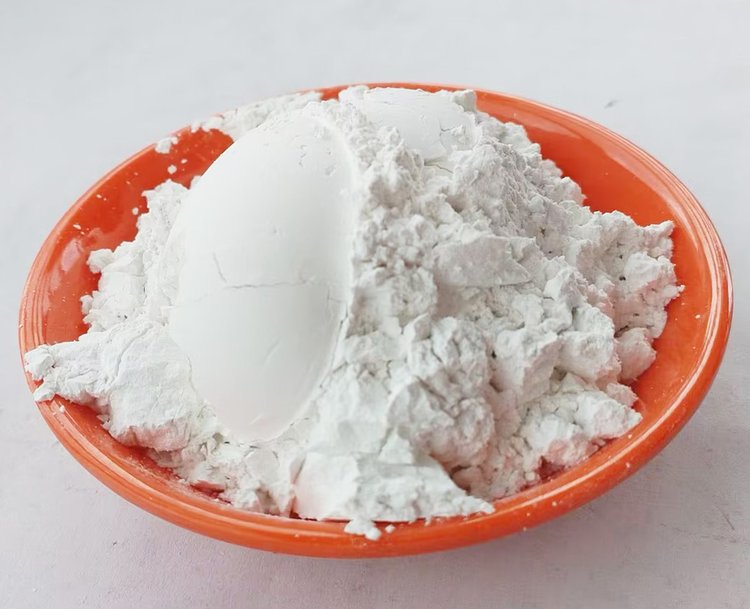
Shanxi Jufeng New Material Technology Co., Ltd. remains committed to kaolin research and innovation. With 5 patents, ISO 9001 certification, High-Tech Enterprise recognition, and exports to Singapore, Japan, Korea and Europe, Jufeng continues to lead in calcined kaolin and nano material technologies.
Jufeng Continues to Increase Investment in Kaolin Research & Innovation
Shanxi Jufeng New Material Technology Co., Ltd. (formerly Shanxi Jufeng Kaolin Co., Ltd.), whose predecessor was established in 1997, has remained true to its original aspiration and continues to increase investment in kaolin research and innovation.
The company specializes in the R&D, production and sales of calcined kaolin and nano materials. It holds 5 related patents and exports its products to Singapore, Japan, Korea, Europe and other international markets.
Patent Portfolio
| No. | Patent Name | Publication/Announcement No. | Type | Date |
|---|---|---|---|---|
| 1 | Preparation Device and Method for Nano Kaolin | CN107473236B | Invention Patent | 2023-12-29 |
| 2 | Preparation Method for PA Kaolin Composite Material | CN109251515A | Invention Patent | 2019-01-22 |
| 3 | Preparation Device for Nano Kaolin | CN207375756U | Utility Model | 2018-05-18 |
| 4 | Supercritical CO₂ Assisted Modification Equipment for Kaolin | CN207221921U | Utility Model | 2018-04-13 |
| 5 | Stearic Acid Modified Kaolin | CN103013187B | Invention Patent | 2014-04-16 |
Registered Trademark
The company owns the registered trademark "Jufeng" (琚丰), Registration No. 1573645, International Class 01 (Chemical Raw Materials), filed on 2000-03-30.
Qualifications & Certifications
- ISO 9001 Quality Management System — Certificate No. 016TY23Q32820R0S, issued 2023-11-10, covering the entire kaolin production process
- High-Tech Enterprise — Certificate No. GR201814000271, recognized 2018-11-21
- Pollutant Discharge Permit — Certificate No. 91140700751518257K002Y, valid until 2026-05-13
- A-Class Taxpayer — consecutively rated for multiple years, most recently in 2025
- VAT General Taxpayer — business term valid until 2060-10-23
- Paid-in registered capital: RMB 10 million; status: active
Export Markets
As a long-established kaolin exporter in the region, Jufeng has a mature export layout:
- Export markets: Calcined kaolin and nano kaolin are steadily exported to Singapore, Japan, Korea, Europe and other countries and regions. The company was awarded the title of "Advanced Export Enterprise" in earlier years.
- Export advantages: Relying on its self-developed granulation calcination furnace technology, combined with imported German production processes, no chemical reagents are added during production. Product quality meets international environmental and performance standards, with a stable customer base in overseas kaolin niche markets.
- Export supporting capabilities: The business scope includes general cargo warehousing services, enabling independent completion of warehousing for export goods and supporting cross-border order delivery.
Land & Facilities
In 2010, the company acquired 4.173201 hectares of industrial land in Zhangqing Township, Jinzhong, Shanxi, through public auction, supporting its continued expansion of production capacity.
Recent Public Bidding & Procurement
- 2026-03-10: Shenyang Rubber Research & Design Institute Co., Ltd. — Kaolin 801A/7195 procurement
- 2025-06-16: Shanxi Zhenxing Highway Supervision Co., Ltd. — Laboratory building lease service
- 2025-02-14: Shanxi Zhenxing Highway Supervision Co., Ltd. — 2025 laboratory building lease
- 2024-07-23 / 2024-05-24 / 2024-02-02: Shanxi Zhenxing Highway Supervision Co., Ltd. — Laboratory living building lease
About Kaolin
Kaolin (theoretical formula: Al₂[(OH)₄/Si₂O₅]) is a non-metallic mineral — a clay and claystone mainly composed of kaolinite-group clay minerals. It is white and fine, also known as "white clay" or "porcelain clay". It is named after Gaoling Village in Jingdezhen, Jiangxi Province.
Pure kaolin is white, fine, soft and earthy, with good plasticity and refractoriness. It is an essential ingredient in the manufacture of china and porcelain and is widely used in paper, rubber, paint and many other products.
In its natural state, kaolin is a white, soft powder consisting principally of kaolinite. Under the electron microscope, kaolinite appears as roughly hexagonal, platy crystals ranging from about 0.1 to 10 micrometres or larger. Approximately 40% of kaolin produced is used in paper filling and coating. It is also used extensively in ceramics, refractories, rubber reinforcement, paints, adhesives, inks, organic plastics and cosmetics.
Calcined Kaolin & Surface Modification
Calcined kaolin is made from natural kaolin through calcination and dehydration. It features high whiteness, large surface area, insulation and thermal stability. It has excellent chemical corrosion resistance, solvent resistance, acid and alkali resistance, and good reinforcing and processing performance — widely used in coatings, paints, papermaking, rubber, plastics, cables, ceramics and other industries.
Calcination temperature is a key factor determining the application of the final product:
- Low temperature (600–1000°C): High-activity kaolin, used in molecular sieves, aluminum salt chemicals, and functional plastic/rubber materials.
- Medium temperature (1000–1200°C): High whiteness and opacity, used in papermaking and coatings, replacing titanium dioxide as a structural pigment.
- High temperature (above 1200°C): Forms mullite and cordierite, used in foundry sand, high-grade refractories and special ceramics.
Surface modification changes the surface physicochemical properties of calcined kaolin to improve its affinity and dispersion in organic polymer materials, enhancing product performance, increasing filling quantity, and reducing costs. Silane coupling agents are most commonly used, with a typical dosage of 0.3%–1.2%. The modification process involves heating the calcined kaolin to about 100°C under high-speed dynamic conditions, adding hydrolyzed silane coupling agent or compound modifier (preferably atomized), maintaining reaction temperature within 120°C for 3–5 minutes.
Common surface modification equipment includes high-speed kneading machines, continuous modification machines, and high-frequency vibration mills. The selection of equipment should be based on the surface modification mechanism and process to meet technical requirements.
Commitment to the Future
Looking ahead, Shanxi Jufeng New Material Technology Co., Ltd. will continue to uphold its original aspiration, increase investment in scientific research and innovation, and provide high-performance, eco-friendly kaolin products to customers worldwide.