

Calcined Kaolin
Calcined Kaolin
Jufeng brand calcined kaolin is our flagship product, widely used in coatings, rubber, plastics, inks, insulation and electronics. High whiteness, high purity (SiO₂+Al₂O₃ up to 98.67%), excellent opacity and hiding power. Can replace 20-50% of titanium dioxide and completely replace lithopone.
Key Features
- High whiteness and brightness
- High purity (SiO₂+Al₂O₃ up to 98.67%)
- Strong adsorption (amorphous porous structure)
- Excellent opacity and hiding power
- Good dispersibility and suspension
- Can replace 20-50% of TiO₂, completely replace lithopone
- Non-toxic, odorless, eco-friendly
- Excellent electrical insulation properties
- Good reinforcement for rubber and plastics
Applications
Product Overview
Calcined Kaolin in Detail
Jufeng Calcined Kaolin — Our Flagship Product
Jufeng brand calcined kaolin is the flagship product of our company, with a wide range of applications across multiple industries. As a functional and environmentally friendly pigment/filler, calcined kaolin has been widely used in the coatings industry, demonstrating superior performance.
Coating-Grade Kaolin
Calcined kaolin is a functional, eco-friendly pigment and filler that has been widely adopted in the coatings industry thanks to its outstanding performance.
- Strong adsorption — amorphous porous structure
- Long-lasting vivid colors — high purity (SiO₂+Al₂O₃ up to 98.67%) and high weather resistance
- Excellent leveling and gloss — high whiteness, fine particle size
- Improved refractive index and hiding power — amorphous porous structure and excellent particle size distribution
- Good dispersibility and suspension — stable physicochemical properties
- Enhanced product competitiveness — can replace 20-50% of titanium dioxide and completely replace lithopone
- Meets green environmental requirements — non-toxic, odorless white extender pigment
Rubber Functional Filler
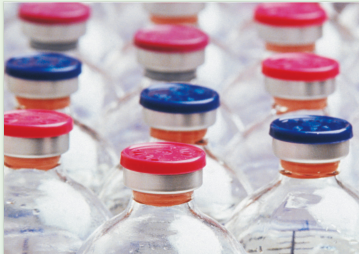
Medical butyl rubber stopper filler: Specifically developed for the pharmaceutical industry, using raw materials with heavy metal content below national standards. High whiteness, low specific gravity, low impurities — effectively increases volume and reinforces rubber stoppers, meeting medical device safety standards.
Rubber-specific functional filler: High whiteness, fine particle size, narrow particle size distribution, low metal content. Excellent reinforcement and insulation properties. Can replace a large amount of silica and part of carbon black. Suitable for rubber cables, automotive seals, rubber hoses, rubber strips, buffer pads, insulation boards, footwear and other rubber products.
Plastic Functional Filler
PVC cable-specific: Calcined under strict temperature control. High whiteness, reasonable particle size distribution, strong activity. Functions as an auxiliary heat stabilizer and adsorbs migratable ions in PVC, improving the insulation performance of PVC cables.
Greenhouse film-specific: Calcined under strict temperature control. High whiteness, fine particle size, reinforcing effect. Can improve the mechanical properties of greenhouse films. The flaky structure containing Si can effectively block infrared radiation and raise the temperature inside the greenhouse. Temperature control reduces the mullite phase ratio, lowers powder hardness and reduces wear on film-making equipment.
Nylon-specific functional filler: Organic surface treated, with good compatibility with nylon. Can improve the mechanical properties, aging resistance, water resistance and electrical properties of nylon products, and effectively reduce costs.
Ink-Grade Modified Kaolin
Ink-grade kaolin has been widely used, demonstrating superior performance:
- Excellent hiding power (unique particle length-to-width ratio)
- Improved ink adsorption (amorphous porous structure)
- High weather resistance (high purity with SiO₂+Al₂O₃ up to 98.67%)
- Good leveling and gloss (high whiteness, fine and evenly distributed particle size)
- Enhanced ink viscosity and increased solid content (stable physicochemical properties)
- Anti-settling effect (high surface activity, easy dispersion)
- Improved product competitiveness (can replace 10%-15% of titanium dioxide)
- Meets green environmental requirements (non-toxic, odorless white extender pigment)
Insulation & Electronics Modified Kaolin
Calcined coal-series kaolin has excellent electrical insulation properties. After surface modification, it greatly improves the compatibility of system components, promotes plasticization, reduces melt viscosity, increases adsorption surface and activity, adsorbs residual conductive ions in insulating electronic materials, and improves electrical insulation — volume resistivity increases by more than four times. It also improves product surface gloss, dimensional stability, precision and chemical corrosion resistance, and significantly improves insulation stability in humid environments.
Other Industries
Due to its unique and excellent physicochemical properties, calcined kaolin is used as a functional extender pigment/filler to improve product performance and reduce costs, with broad development and application prospects:
- Electrical ceramics & ceramics: High refractoriness, good plasticity, adhesion and sinterability
- Pharmaceutical, pesticide & oil refining: Microporous structure, strong adsorption, used as catalyst to improve oil quality
- Premium daily chemical products: White extender pigment/filler, good adsorption, high temperature resistance, non-toxic and eco-friendly
- Silicon fertilizer & feed additives: Neutral, high silicon content
- New composite materials: Good mechanical strength, impact resistance, radiation resistance, high temperature resistance and corrosion resistance
Technical Data
Typical Specifications
Typical values, not to be used as specification limits. Contact us for detailed Technical Data Sheets.
| Property | Typical Value |
|---|---|
| Whiteness | ≥ 92 |
| Particle Size (D50) | 1.0 – 2.0 μm |
| SiO₂ + Al₂O₃ Content | ≥ 98.67% |
| Oil Absorption | 40 – 55 g/100g |
| pH | 6.5 – 7.5 |
| Moisture | ≤ 0.5% |
| Volume Resistivity | ≥ 1.0×10¹⁴ Ω·cm |
| Refractive Index | 1.62 |
| Specific Gravity | 2.5 – 2.6 g/cm³ |
Note: The data above are typical values obtained under standard test conditions. They are for reference only and should not be used as the basis for product specification. Please contact us for a detailed Technical Data Sheet (TDS) and Safety Data Sheet (SDS).